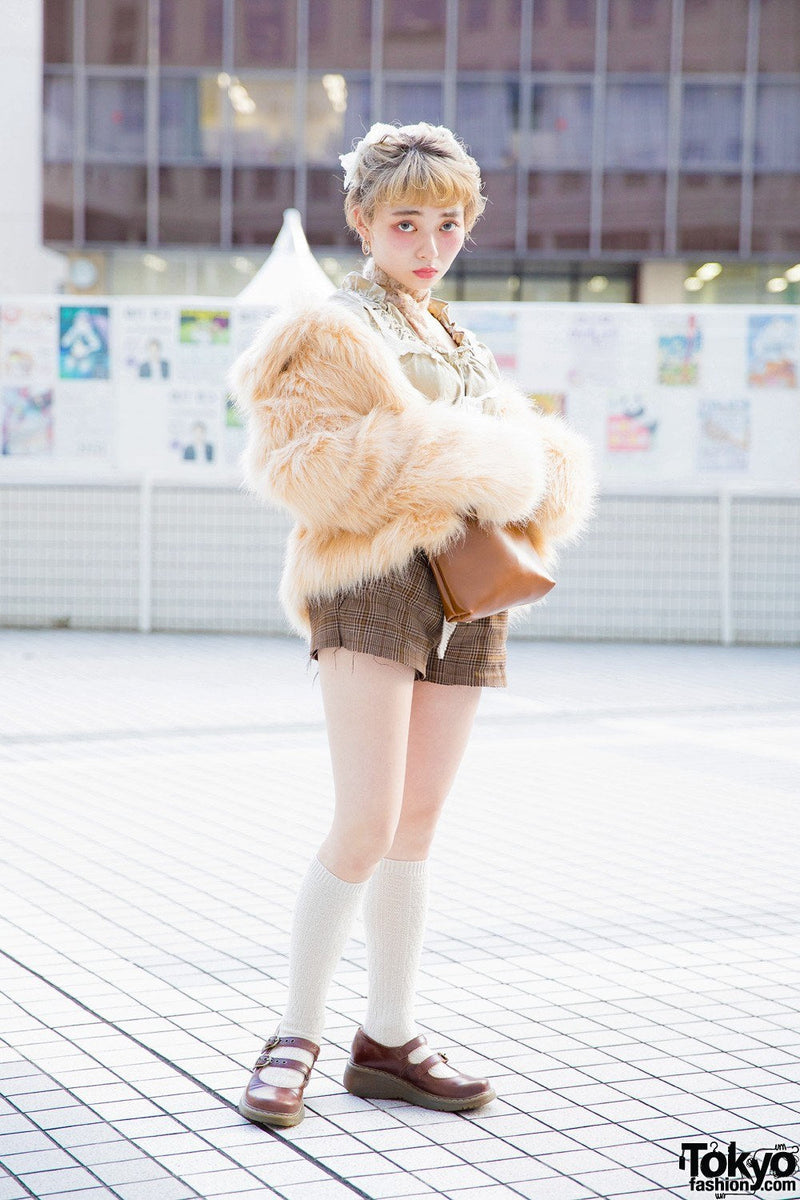
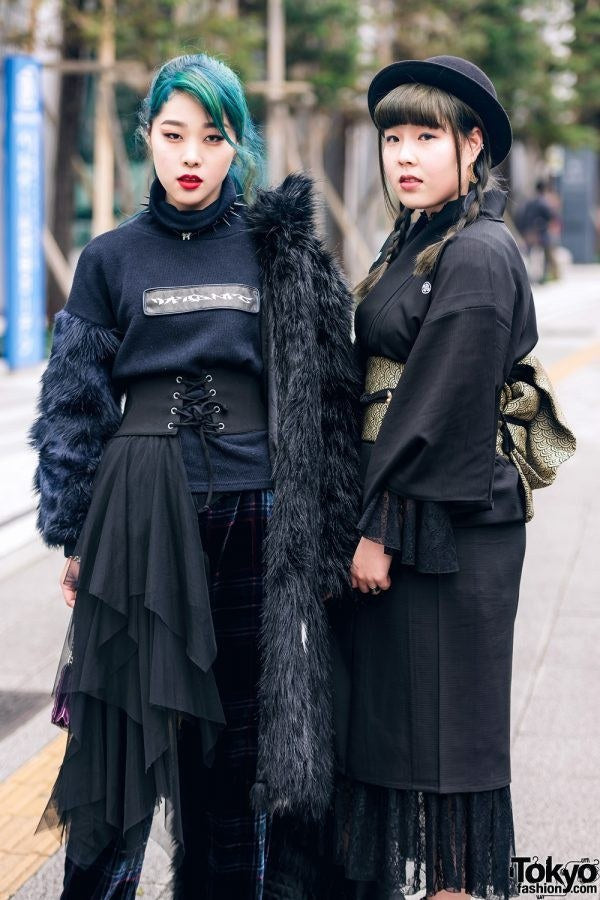
A black kimono-style wrap belted over wide trousers, finished with loafers and pink hair: this is not your grandmother's formalwear. Across Harajuku, young people are pulling kimono and kimono-inspired pieces out of the ceremony box and into daily rotation, treating traditional dress as raw material for street styling.
The modern approach is less about authenticity and more about attitude. A haori worn open like a jacket, a hakama paired with sneakers, an obi restyled as a statement belt—each move keeps the garment's line while shedding its rules. The effect bridges eras: unmistakably Japanese, unmistakably now.
It is also a quietly political style, reclaiming heritage dress from stiffness and tourism and making it feel lived-in again. Street photographers at Tokyo Fashion capture these looks often, and they reward close reading—the way a traditional silhouette shifts meaning next to dyed hair and modern shoes. To experiment, start with one traditional piece and style everything else contemporary; let the contrast, not the costume, carry the look.