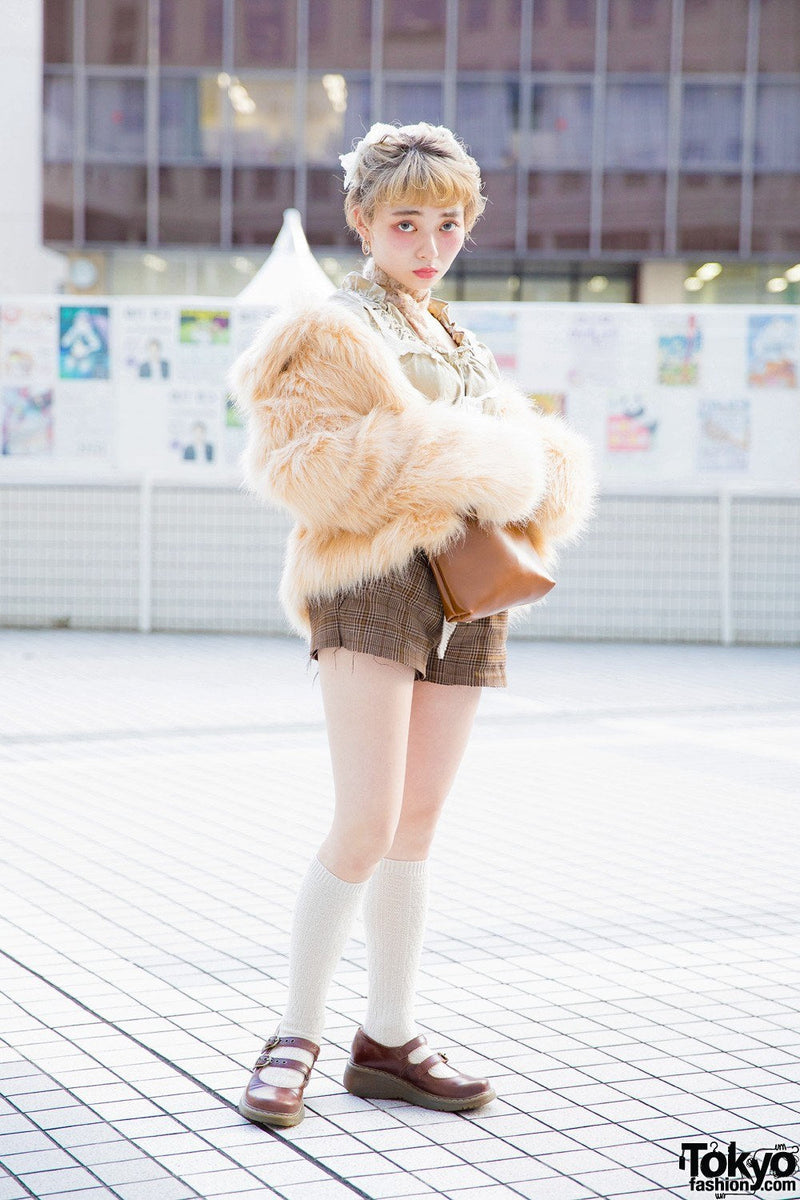
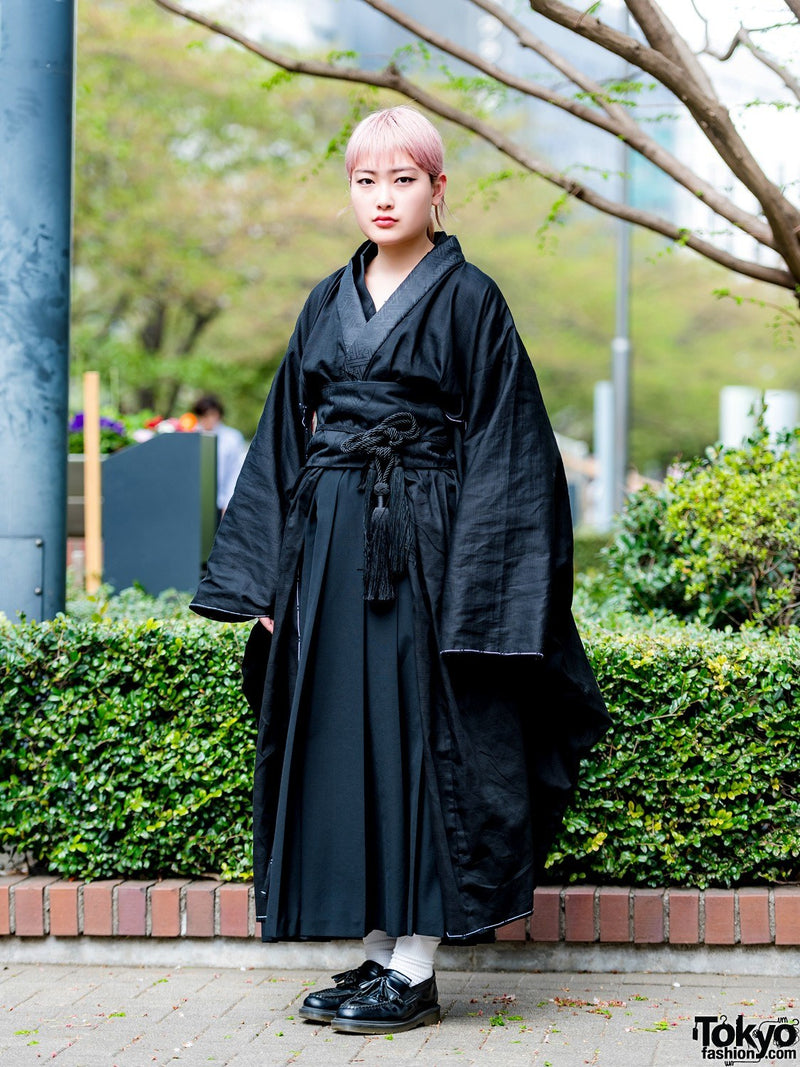
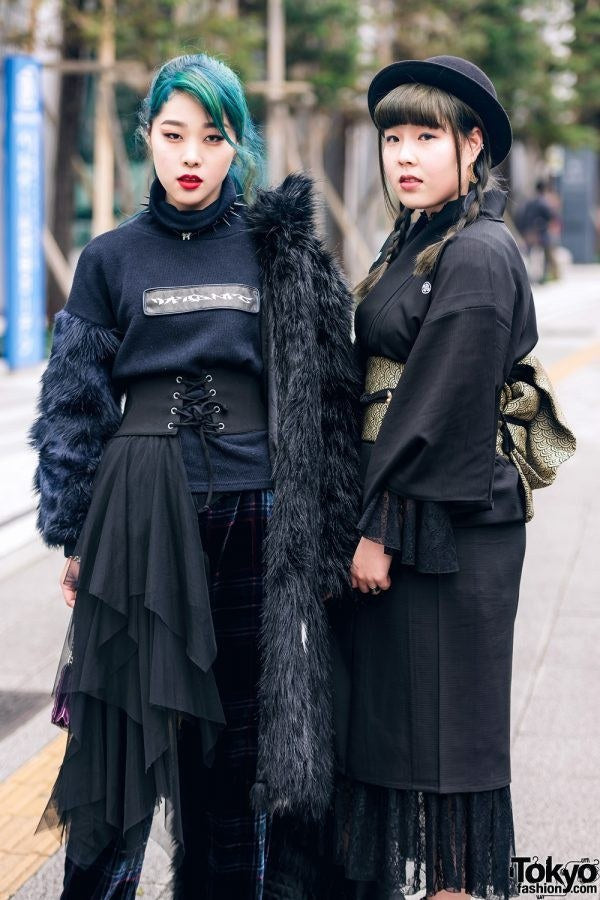
The word "jirai" (地雷) means landmine. Not as a compliment. It started as an insult — used on anonymous Japanese internet forums to describe women considered emotionally volatile, unpredictable, "dangerous" to be around. The kind of dismissal that gets applied to women whose feelings are inconvenient. The kind of word that, in another era, would have simply landed and stayed as a wound.
Instead, something else happened. The girls it was aimed at took it, turned it into an aesthetic, and built an entire subculture out of the act of wearing it proudly. That reclamation is what makes jirai kei interesting beyond the frills and the makeup — and it's why understanding who jirai kei girls actually are matters more than cataloguing what they wear.
Where It Started: Kabukicho and the Toyoko Kids
Jirai kei's roots are in a specific place and a specific community. In Tokyo's Kabukicho — Shinjuku's entertainment district, host clubs, late nights, neon — a group known as the Toyoko Kids emerged: young people, many of them runaways or teenagers with nowhere else to go, who gathered near the Toho building and developed a shared visual language. Sweet clothing, heavy makeup, the specific look of someone trying to appear composed while holding a lot underneath. Kabukicho's host club culture fed into this aesthetic too — a world that prizes appearance, performance, and the tension between what's shown and what's felt.
This is where the visual grammar of jirai kei formed: pale skin, dramatic under-eye shading (the “tear bag” or namidabukuro), dark gradient lips, twin tails with big ribbon bows, black and pink coords, platform Mary Janes. The look of someone who appears delicate but has clearly survived something.
The Reclamation
The term jirai onna — landmine woman — was originally a derogatory label from internet forums, applied broadly to women associated with emotional complexity, mental health struggles, BPD, mood disorders, or simply not being easy to deal with. It was used dismissively, to categorise and dismiss women whose inner lives didn't fit a more convenient mould.
What happened next is the subculture's defining moment. Rather than rejecting the label, the women it was applied to adopted it. They built an aesthetic around it. They made the landmine visible — the sweet exterior, the hint of something more complex underneath, expressed deliberately through clothing and makeup rather than hidden from view. The message encoded in a jirai coord is not "I'm about to explode." It's closer to: "I know what you called me, and I'm wearing it."
This is what distinguishes jirai kei from other kawaii subcultures. The sweetness is genuine, but it's not innocent. There's self-awareness built into every coord choice. As one framing puts it: the jirai kei girl says "I'm cute, but not simple."
Fashion Jirai vs Lifestyle Jirai
Within the subculture, there's an important distinction that often gets flattened in outside coverage. There are two streams:
Fashion jirai — girls who engage with jirai kei primarily as an aesthetic. They love the look, the makeup techniques, the coord-building, the community around the style. They may have no personal connection to the darker aspects of the subculture's history and don't claim to. The emotional register of the clothes resonates with them; the lifestyle associations don't define them.
Lifestyle jirai — girls for whom the subculture is a genuine expression of lived experience. Mental health struggles, the reality of Kabukicho nightlife, emotional complexity that the fashion gives voice to. For this group, jirai kei is less a trend and more a community that sees them accurately.
The tension between these two streams is real within the Japanese jirai community itself. Some of the actual Toyoko Kids have expressed discomfort with the aestheticisation of their reality by people who don't share it. This is a nuance worth holding: the fashion is accessible and the aesthetic is genuinely compelling, but the subculture it comes from has weight behind it.
The Characters: Kuromi, Menhera-chan, and the Visual Vocabulary
Jirai kei's emotional world has a cast of characters associated with it. Sanrio's Kuromi — My Melody's rebellious rival, dark and mischievous where My Melody is purely sweet — became a near-official mascot of the aesthetic. Sanrio noticed, and released jirai kei-inspired Kuromi and My Melody plushies. The girl who carries Kuromi merch and the girl who carries My Melody merch are understood as distinct personality types within the style community.
Menhera-chan — the "suicidal magical girl" character that emerged from Yami Kawaii, a related dark-cute subculture — also overlaps with jirai kei territory. Menhera sits on the more mental-health-forward, emotionally transparent end of the dark kawaii spectrum, where jirai kei is more about allure and dark romance than explicit mental health expression. The two are related but distinct.
How It Went Global: The 2020 Viral Moment
In February 2020 — right before the world shut down — a "landmine makeup challenge" went viral on Japanese social media. Creators filmed themselves transforming into the jirai kei makeup look, and the format spread fast. By the time COVID restrictions were in full effect and everyone was home on their phones, jirai kei was well-established enough as a visual language to travel internationally. TikTok and Instagram carried it to audiences in the US, UK, and Southeast Asia who responded to the emotional register even without the cultural context.
The global version of jirai kei is predominantly fashion jirai — the aesthetic without the Kabukicho backstory. That's not inherently wrong, but it's worth understanding what was there at the origin. The look was built by girls who needed a way to make visible something that was being dismissed. The eyeliner and the tear bag and the twin tails didn't come from nowhere.
What "I'm Cute, But Not Simple" Actually Means
Japan places significant pressure on young women to present in specific ways — to be feminine but not threatening, expressive but not difficult, emotional but not to the point where it becomes inconvenient for others. Jirai kei is a direct refusal of that. The deliberately complex presentation — cute enough to approach, dark enough to signal depth — is a statement about the right to occupy more emotional space than the culture typically allocates.
Dressing for your own mood rather than for others' comfort is a meaningful act. The jirai girl who does her under-eye shadow carefully and ties her ribbons before she goes out isn't performing fragility. She's exercising ownership over how her inner life gets represented in the world. That's the real meaning of the landmine: not that she might explode, but that she refuses to be defused.