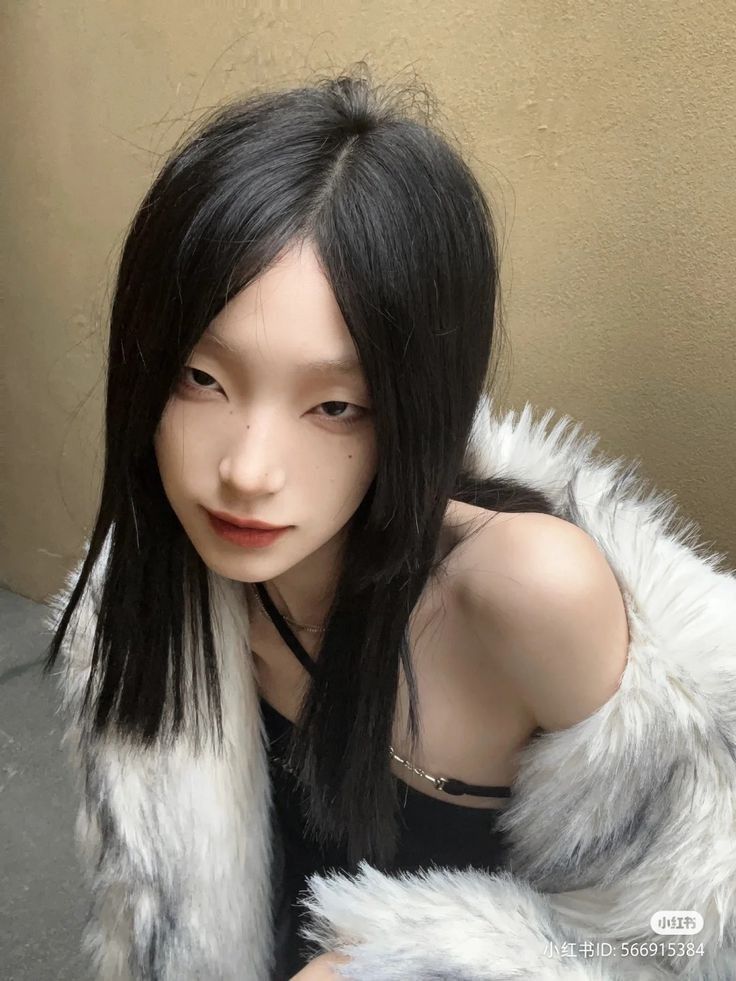
Tinted red glasses pulled halfway down the nose, choppy layered bangs, a frilly white lace top, and a floral skirt peeking into frame from a softly cluttered bedroom. It's an image that feels like it could've been taken yesterday or pulled from a decade-old blog—and that timelessness is exactly the engine behind one of Japan's most persistent style archetypes: the bishoujo, or "pretty girl," aesthetic.
Where "Pretty Girl" Comes From
Bishōjo originated as a term in anime and manga, describing a particular kind of idealized, doll-like female character design—large expressive eyes, soft round faces, delicate features. Over time, that visual language jumped off the page and into real-world styling, influencing makeup trends, photography poses, and entire fashion subcultures built around recreating that same "too pretty to be real" quality in everyday life.
Reading the Look
This photo is a clean, modern interpretation of that idea. The tinted glasses do double duty—they're a clear style statement and a framing device that draws attention straight to the eyes, the focal point of the entire bishōjo visual language. Layered, slightly messy bangs soften the face, while the lace-trimmed top and floral skirt lean into a gentle, slightly retro femininity that feels intentional rather than accidental. Even the setting—a lived-in, softly cluttered room—adds to the effect: this isn't a styled set, it's someone's actual space, which makes the "too pretty to be real" quality land as authentic rather than performative.
Why the Aesthetic Keeps Coming Back
Bishōjo styling overlaps with several related Japanese aesthetics—dolly kei, mori kei, and various Lolita substyles all share its love of softness, nostalgia, and carefully constructed "prettiness." Our piece on cottage Lolita covers a closely related branch of this same instinct—soft textures, vintage references, and a deliberate distance from anything sharp or aggressive. What keeps bishōjo specifically alive across so many fashion cycles is its flexibility: the core idea (soft features, considered styling, a slightly nostalgic mood) can be reinterpreted endlessly without ever losing its identity.
Building the Look
To bring bishōjo energy into your own styling, focus on softness and framing—glasses or accessories that draw attention to the eyes, lace or floral textures, layered hair that feels a little undone rather than precisely cut, and a setting that feels personal rather than staged. Belchic's new arrivals regularly stock the kind of lace tops and soft floral pieces that make this aesthetic easy to build into an everyday wardrobe.
Trends come and go, but the appeal of looking like a character who stepped out of someone's favorite story never really goes out of style.