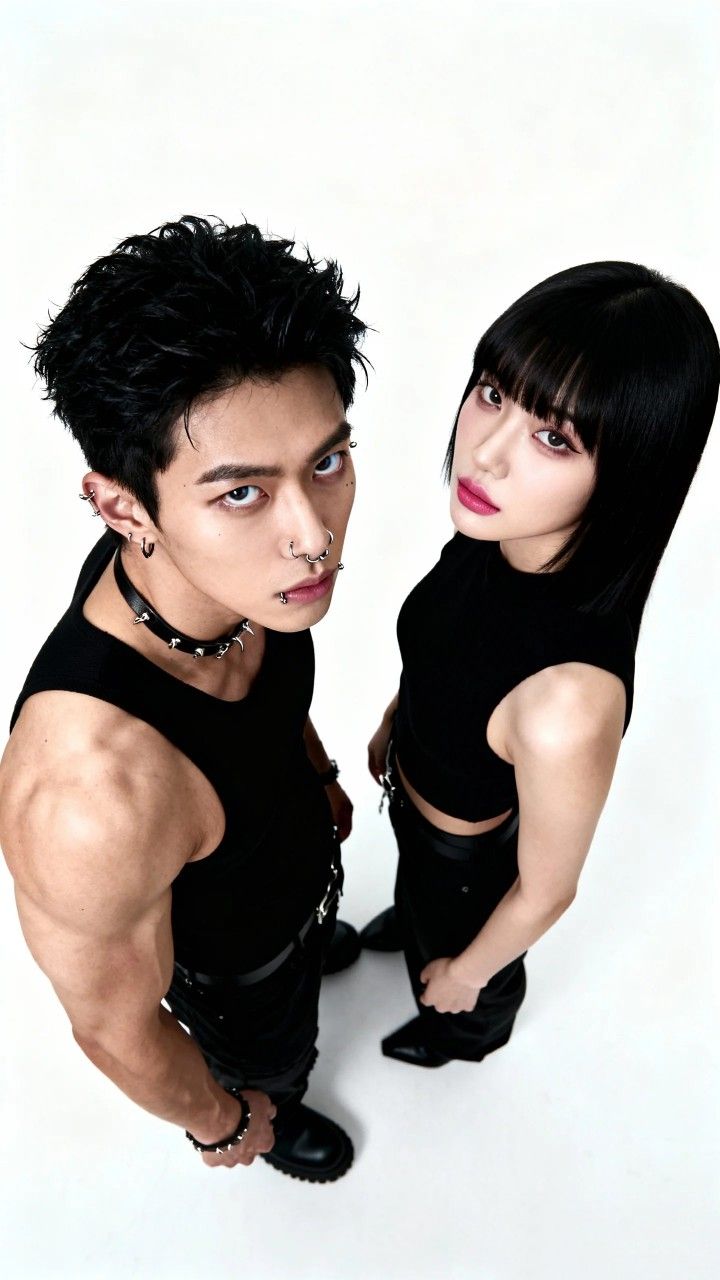
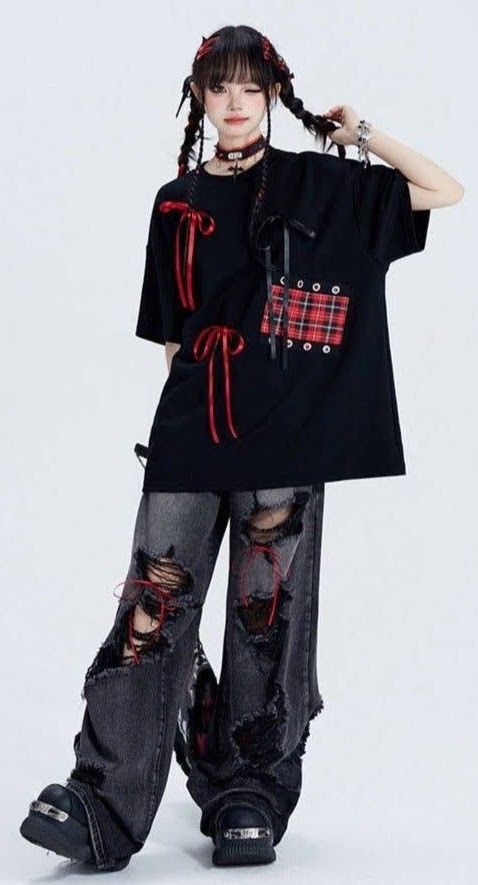
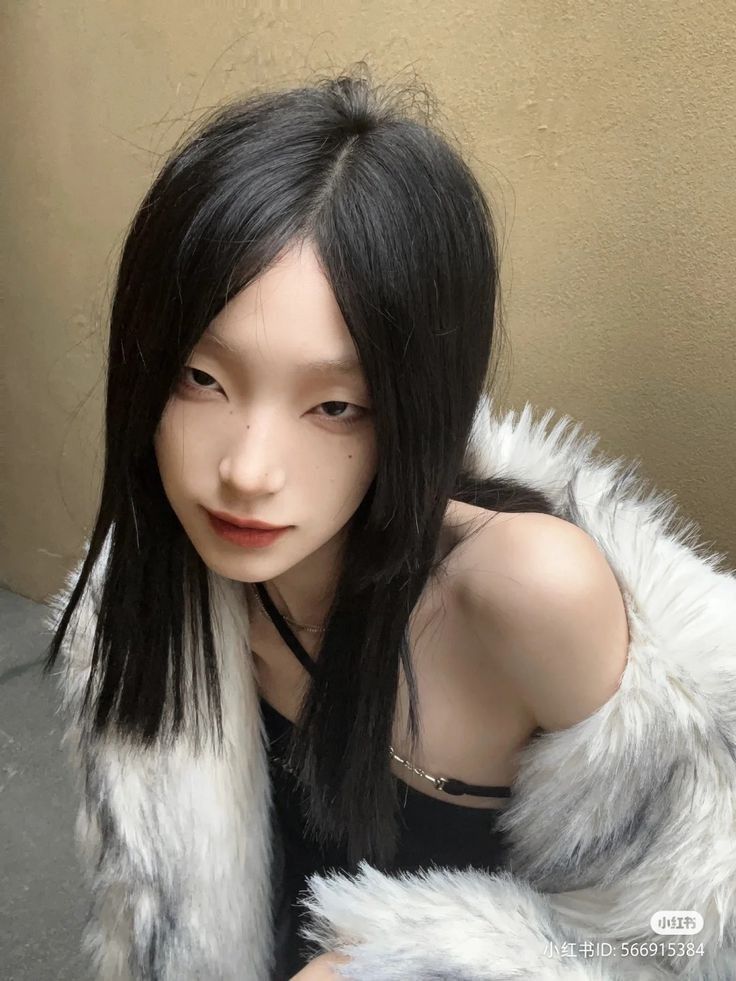
Scroll through any "Japanese street style" tag on social media long enough and you'll eventually land on a familiar combination: striped arm warmers, fishnet layers, chunky platform boots, smudged eyeliner, and a peace sign. It looks unmistakably online—and it is. This is the e-girl aesthetic, and despite reading as a very Western, very TikTok phenomenon, its roots run straight through Japanese street fashion.
Where E-Girl Actually Comes From
The popular image of the e-girl—dyed hair, blush drawn high on the cheeks, oversized chains, and a mash-up of grunge and kawaii—gained mainstream traction through TikTok around 2018. But the subculture's actual lineage traces back much further, through Tumblr-era scene and emo communities, and—crucially—through 2000s Japanese street fashion. Anime, kawaii, and Lolita aesthetics fed directly into what would later be packaged as "e-girl": the high cheek blush is straight out of moe character design, the oversized accessories borrow from Harajuku decora, and the overall mash-up sensibility is pure Japanese street fashion logic, where clashing references are the point rather than the problem.
Reading the Look
The outfit pictured here is a clean distillation of the style: a striped two-tone sweater (a soft-grunge holdover from 2014 Tumblr fashion), sheer black layering pieces with lace trim, fishnet leg coverage, and heavy lace-up platform boots that ground the whole thing. Add in butterfly hair clips, twin-tail styling with a colored streak, and a stack of rings, and you've got an outfit that reads as deliberately mismatched—soft pastel accessories pushed up against hard, almost goth-adjacent silhouettes.
That tension is the entire appeal. E-girl fashion takes pieces that, on their own, would belong to entirely different subcultures—mall goth, kawaii, grunge, Lolita—and forces them into the same outfit until they read as a single, coherent identity. It's less "pick a lane" and more "build your own lane out of everyone else's."
Why It Took Off Globally
Part of what makes e-girl fashion so durable is that it was built for the internet from day one. Every element of the look—the makeup, the layering, the accessories—photographs well in the exact lighting conditions of a phone camera and a ring light. It's an aesthetic optimized for being seen in two-second video clips, which is precisely why it spread so fast once TikTok gave it a stage.
It also gave a lot of young people permission to combine interests that used to feel mutually exclusive: you could love anime and grunge music and goth makeup and Y2K accessories without picking just one. If you've read our breakdown of Japan's Y2K revival, you'll recognize a lot of overlapping DNA—chunky platforms, butterfly motifs, and a willingness to remix decades of references into something new.
Building the Look
If you want to put together an e-girl coord that leans into its Japanese roots rather than its Western TikTok packaging, start with layering: a fitted base layer under something looser and sheer, fishnets or striped socks as a connective layer between hemlines and footwear, and platform boots heavy enough to anchor the whole outfit. From there, accessories do the talking—butterfly clips, layered chains, mismatched rings, and a face full of confident, slightly imperfect makeup. Belchic's new arrivals regularly stock the kind of striped knitwear, lace layering pieces, and chunky platforms that make this look click.
The e-girl aesthetic gets dismissed sometimes as a passing internet trend, but its bones are pure Japanese street fashion: clash on purpose, commit fully, and let the outfit say the thing you don't feel like saying out loud.